By: Denise N. Fyffe. Copyright © 2011, Poetess Defy, Denise Fyffe Sometimes she forgets herself And forget what she is worth She steeps low, giving more than she can afford; She is the mule you pass on your way Shouldering a burden That she has been left alone, to face; She is the cornerstone in … Continue reading Jamaican Poetry: Woman and Mother (For International Women’s Day)
Tag: jamaican articles
Jamaica Festival Song History: 1971 – Watch Eric Donaldson with “Cherry Oh Baby”
1971 - Eric Donaldson with "Cherry Oh Baby" Lyrics from: http://www.stlyrics.com/lyrics/hardertheycome/cherryohbaby.htm Cherry oh, Cherry oh, baby, Don`t you know I`m in need of thee? If you don`t believe it`s true, What have you left me to do? So long I,ve been waiting, For you to come right in. And now that we are together, Please … Continue reading Jamaica Festival Song History: 1971 – Watch Eric Donaldson with “Cherry Oh Baby”
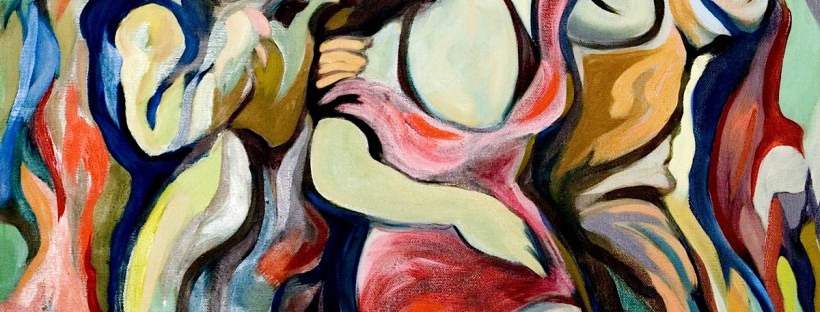
Salsa Dancing – The dance of the sensual and sexy
By: Denise N. Fyffe. Copyright © 2011, Denise N. Fyffe Many couples go salsa dancing every weekend. They believe it keeps them in touch with their Cuban heritage and friends, while being far from family or home. This sexy dance often ignites a sensual feeling or mood in its participants and onlookers. Many people upon … Continue reading Salsa Dancing – The dance of the sensual and sexy
Jamaica Largest Caribbean Supplier of Marijuana to the US
Reblogged - Blame it on Jamaica. According to the 2014 International Narcotics Control Strategy Report released by the United States, the US State Department said Jamaica continued to make slow progress in combating narcotics trafficking, corruption and organized crime in 2013. It asserts that Jamaica remains the largest Caribbean supplier of marijuana to the US … Continue reading Jamaica Largest Caribbean Supplier of Marijuana to the US
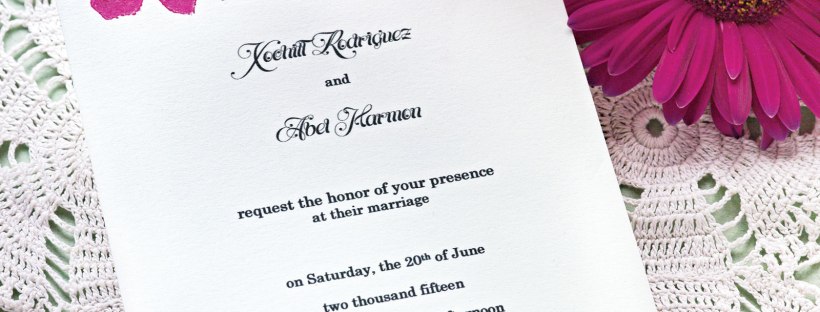
Jamaican Beach Wedding invitation ideas
By: Denise N. Fyffe. Copyright © 2012, Denise N. Fyffe Wedding invitations are an important part of the wedding. This is the first thing that people will see and notice about the event. It announces to the world, about your union and it informs them of what type of Jamaican wedding ceremony you will have; whether … Continue reading Jamaican Beach Wedding invitation ideas
Out of many, one people? Know your place!
Discrimination is still prevalent in our society and while many may ignore this, here is a commentary by someone who has done quite the opposite. Re-blogged from Jamaica: Political Economy: Views on what's happening in and around the Yard The Caribbean is full of class differences. We can argue about their origins, but undoubtedly they … Continue reading Out of many, one people? Know your place!
Jamaica- Ocho Rios
Jamaica has surely left an impression on many of its visitors. Here is an honest account, served with the good and the bad.
Re-blogged from The Fair Prima Donna
In February 2010 I went to Ocho Rios, Jamaica with my younger brother and parents. It was a much needed break from University, and the vitamin D did me well. I loved the beautiful clear water, the blue sky, and smoldering heat.
First I will say; my time in the all inclusive resort was great (Except the elevator failing for about 15 minutes which led to my taking the stairs the rest of the trip). The entertainment, food, drinks, and beaches were wonderful- however, I learned that tips do no go to resort employees. In order to tip, I had to discretely fold money into the palm of my hand and shake hands, slipping the money to the resort employees. (This was a trick that a shuttle driver explained to us.)
On my first day of trying to get a tan, I fell asleep on the beach and got a disastrous burn. This was my fault for not wearing an sport sunscreen, I simply sweated my sunscreen off. I had heard about blistering, but it was my first time that had happened to me. I was horrified at the blisters on my chest, but had learned a seriously needed lesson.
The resort was fun, the people were great. There was always something to do, and unique activities (such as goat races).
Outside of the resort did not feel as comfortable, even in the tourist friendly areas. My mom and I walked through the markets and would be followed by men asking to take us for lunch and trying to get us into their vehicles. Now, these could have been genuinely friendly men, but the situation still felt unsafe for two women. Outside of the tourist friendly zones is a completely different view, there were certainly areas where we did not feel welcome. In such areas, we remained respectful and left.
It is important to remember that pretty much every country is safe in certain areas, and that crime can happen anywhere. (Yes, this includes the States and Canada…) It is also important to remember that Jamaica was colonized by the British until the mid 20th century- thus, if tourists aren’t exceptionally liked by locals there is fair reason for that.
There were some wonderfully fun tours offered in Ocho Rios. My favorite was the Dunns River Falls– with this tour, we took a boat to the falls. On the way to the falls there was snorkeling along the reef. My mom and I opted to stay aboard the boat, as I had a bad experience with fire coral in Cuba (giving me a tendency to avoid snorkeling). As we watched my brother and dad snorkel a woman pointed out a fin swimming back and forth on the other side of the reef. All of the snorkelers made it back, and no one saw the owner of the fin. Once we got to the Dunns River Falls we all joined hands to climb up. It was absolutely beautiful, and a fun experience. On the cruise home we were served drinks, and to keep the passengers from getting too tipsy we were taught an epic dance routine. Even with the dance routine I managed to slur my thanks and hug the entire boat crew.
We also went zip lining, which was pretty amazing. I am terrified of heights, and the guides couldn’t help but tease me every time I had to jump. They truly made the experience one that I will never forget. The Jamaican Bobsled ride is also insanely fun, as you get to use a lever to control the speed of your bobsled through the jungle.
I really enjoyed the trip with my family, I always have an adventure with them.
I don’t know if I would go back to Jamaica. If I found an affordable trip, I might just try it again. I have friends and family that have also been do Ocho Rios, we all had different experiences.
In February 2010 I went to Ocho Rios, Jamaica with my younger brother and parents. It was a much needed break from University, and the vitamin D did me well. I loved the beautiful clear water, the blue sky, and smoldering heat.
View original post 618 more words
Jamaican Lifestyle: Top 3 Things to do in Jamaica in 2014
We decided to do something very different this year and enjoy a side of Jamaica in which many tourists do not see or experience! The truly cultural side of ‘country’ as Jamaican’s would say (meaning any part of the island that is outside of the nation’s capital, Kingston).
From this experience we wanted to share 3 absolute things you must try when you visit this beautiful Caribbean destination, Jamaica.
1. Something out of the ordinary
Our first adventure began around a camp fire (yes – they actually build camp fires on the island in the country!). We enjoyed learning about ‘ole’ time Jamaica around the camp fire and understanding why older ladies (like the one pictured above) live such long and healthy lives. And by the way, we learnt that the lady carrying the 10 gallons of water (pictured above) is actually 74 years old and she did that twice a week, walking over 10 miles! We were very impressed!
We ate a simple but extremely tasteful meal of roast yam, roast saltfish and roast dumplin. We were told that roasting yam requires a bit of skill and expertise as it takes a few hours to roast and a gentle hand, but when it was finished we got a slice of this delicious starchy vegetable with a slice of butter on top – YUM!!! It literally melts in your mouth!
The roasted saltfish is an easy one for those of you that would like to try. Just get a slice of the salted codfish, wash off the salt and place the fish on the hot coals to roast for about 15-20 minutes on both sides.
2. Take away a piece of the island
For us it was this Jamaican recipe.
Here is the recipe for the Jamaican roast dumplin…
Jamaican Roast Dumplin Recipe:
- 2C Flour (counter flour)
- Water
- Dash of salt
1. Add salt to flour
2. Gradually add water to flour and knead until it forms a spongy dough
3. Make small, round, flat Jamaican dumplins and place on the embers (ashes – NOT on the direct fire!)
4. Roast for about 10 minutes on each side
3. Bring out the wild side in you!
We took a walk in their luscious Jamaican farm land and picked some local Jamaican fruits (we ate half of them along the way
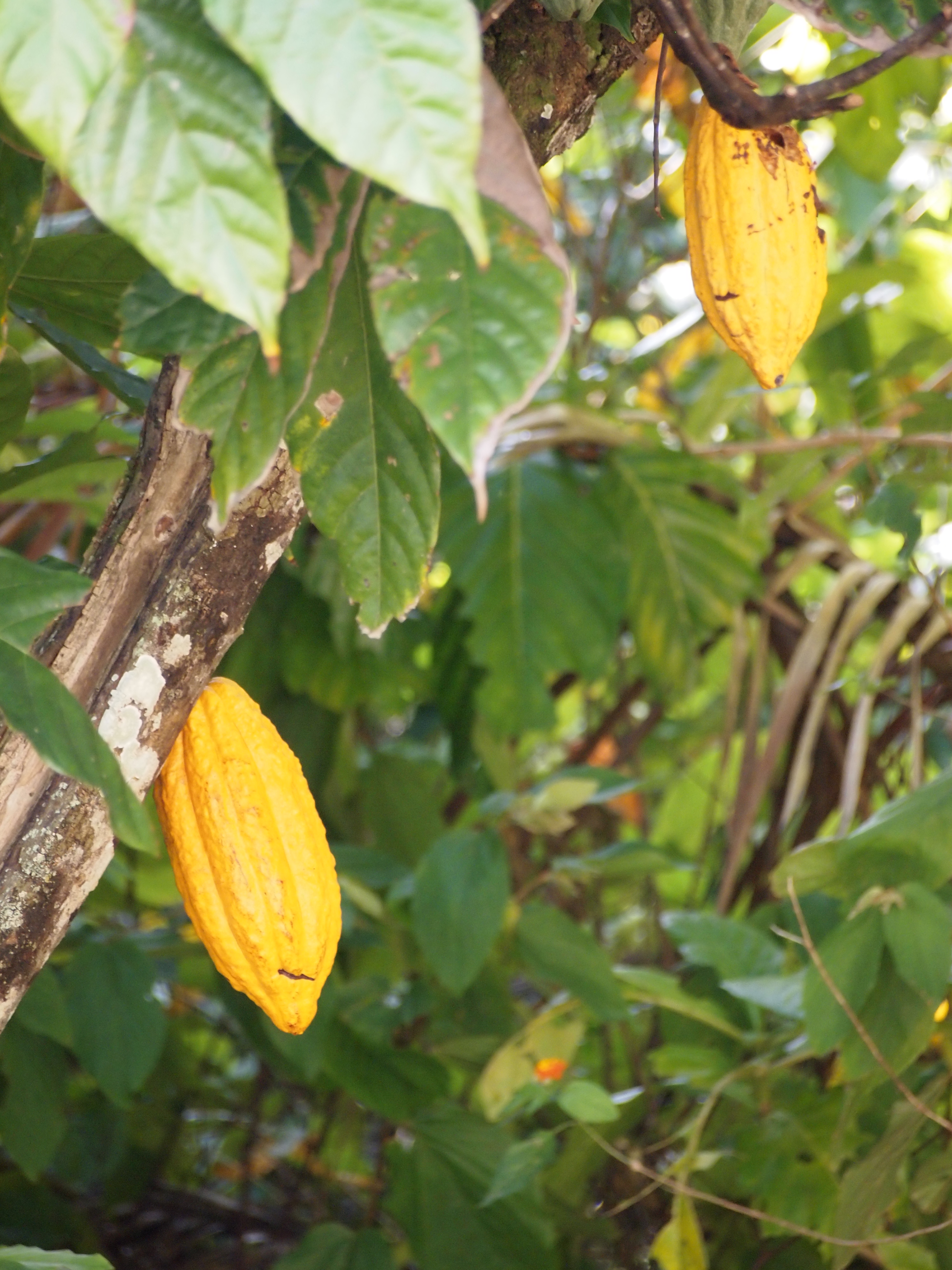
but it was a fantastic experience. We also found a cocoa tree which we picked and learnt the process of how to make hot chocolate.
Jamaican Cocoa Chocolate Recipe:
Processing the Jamaican cocoa (chocolate) from the Cocoa tree
Step 1: Pick the Jamaican cocoa off the tree and shell it (open the fruit and take out the seeds)
Step 2: Put the Jamaican cocoa seeds out in the sun to dry
Step 3: Once the Jamaican cocoa seeds are dry then put them in to a pot (no liquid) and parch it in order to remove the shell.
Step 4: After the Jamaican cocoa shell is removed then you need to mortar the seed in order to make the chocolate fine.
Enjoy a cup of your Jamaican chocolate with some sugar and milk. It is so much better than Jamaican milo!
Related articles
- Jamaican Food / Cuisine: Lick yuh lips and ten finga dem (theislandjournal.wordpress.com)
- Jamaica, She is Royal (theislandjournal.wordpress.com)
- Jamaican Education System: Primary to Tertiary (Education in Jamaica) (theislandjournal.wordpress.com)
- Jamaica National Trials 2012: Esteem for Jamaican Sprinter, Asafa Powell (theislandjournal.wordpress.com)
Rewind Selecta! As my Jamaican friend would say…
This year, we rang in the new year on the beautiful island of Jamaica! There is so much that is said about Jamaica but it is fact that it is a country known for its vibrant culture, spicy foods such as jerk chicken and pork, reggae music (Bob Marley) and mountains filled with lush vegetables and plant life.
We decided to do something very different this year and enjoy a side of Jamaica in which many tourists do not see or experience! The truly cultural side of ‘country’ as Jamaican’s would say (meaning any part of the island that is outside of the nation’s capital, Kingston).
From this experience we wanted to share 3 absolute things you must try when you visit this beautiful Caribbean destination.
1. Something out of the ordinary
Our first adventure began around a camp fire…
View original post 430 more words
Jamaican Writers: Diane Browne
Diane Browne has written over 40 stories/books. She has been published by Ginn in the United Kingdom; Harcourt Brace and Friendship Press in the USA; Heinemann Caribbean, Carlong Publishers, Arawak Publications, and the Ministry of Education in Jamaica.
She has been a visiting author for the Students’ Encounter Programme at the Miami Book Fair, and has presented papers on children’s literature at the National Association of Teacher’s of English, UK; the International Association of School Librarianship, the International Reading Association and the Association for Supervision and Curriculum Development. She has frequently participated as trainer/consultant in writing workshops for both writers of children’s fiction and textbooks, in Jamaica and the wider Caribbean.
THE JOURNEY
My journey began when I was quite young; I loved books. I read the usual books, Bobbsey Twins, Nancy Drew and Hardy Boys as well as listened to Anancy stories. But I knew that I wanted someone to write books about us, people who looked like us and lived like us. I longed for this. And then when my two girls were little, I realized that this person could be me. There was nothing for them to read that represented them. There was a particular Enid Blyton book ( a British children’s author) in which there was a golliwog, which was a doll depicting black people, a caricature really, and he was always the one giving trouble or getting into trouble. A subtle but significant message. My older daughter, was then only about eight, and she remembers feeling uncomfortable about this. Our story book heroes were still the golden haired girls and princesses. I had to write children’s stories so my children, all our children would have books reflecting positive images of themselves.
However, my journey is not only a story of my writing for children. It became a journey as a children’s writer with a passion for raising the consciousness, here and in the Caribbean region, of the importance of our own children’s stories to validate our children and their lives. Children must see themselves in books.My actual writing journey began on a project for the Ministry of Education. The project was to write supplementary readers, the Dr. Bird Readers, for our government-run primary schools (elementary schools), which the majority of the children in the island attend. This was in the late 1970s early 1980s, and it was revolutionary. Story books which featured snow, ice skating, sledding and firesides and chimneys were presented as the norm for children, who lived in a country which was hot all year round, where beaches and palm trees and towering green mountains and tropical vegetation were what they saw. When our writing team went into schools to meet our target audience, we discovered that the children thought that all writers were either foreigners or were dead. The Dr. Bird books changed this. They are still in schools, and even now, I run into adults, a policeman, a nurse, who remember favourite books from that series. My most recent experience was last year with a team interviewing at risk youth, ages 15 – 20, all male. When asked what books they could remember reading, we got the not unexpected looks of astonishment. How could anybody expect them to remember a book? And then they began to recall books they had read in school and call out their names – books I had written.
I grinned with pleasure, as it dawned on them: “Is she write it?” (Amazement!) “Yes, is she write it!”
(Discovery): And I replied, “Yes, is me write it.” Creole is often used to express surprise, a familiarity one with the other. Grins and laughter all round. We were one in this delight of writing and reading our own stories. These were their story books. These are what they remember.
One of my picture story books produced by Heinemman Caribbean at this time was Cordelia Finds Fame
and Fortune. This was also published in the USA in a library series called Passports by Harcourt Brace and Company. Although I had only used Creole structures in the dialogue, and very modified ones, the American edition totally changed those so that a folk song in the book, the first line of which read , ‘Oh Cordelia Brown, whe mek you head so red?’, became ‘Oh Cordelia Brown, what makes your hair so red?’ Nonetheless, I was thrilled that there had been an American edition; at the recognition. And I was fortunate to be part of a Student’s Encounter Programme for the Miami Book Fair where we were able to sing the original version of that folksong.Cordelia Finds Fame and Fortune, is about a little girl who is teased because she has red hair with dark skin, an anomaly. That was connected to my younger daughter’s experience, although I did not realize that that was my inspiration then. Our passions inform our writing journey even when we aren’t looking.
My journey has taken me from picture story books to ‘tween’ books, two Time Travel novels in which the protagonists go to historical events in our past,( because we can do time travel too just like people in big countries); and to my most recent book, a novel in the YA genre, Island Princess in Brooklyn, published by Carlong Publishers, Jamaica, 2011.
THE BACK STORY
ISLAND PRINCESS IN BROOKLYN is a coming of age story of a 13 year-old protagonist, who reluctantly leaves her Granny with whom she has grown, to join her mother in Brooklyn. Princess has to adjust not only to a mother she barely knows, but also to a stepfather she never knew existed, a new country and a new school.
My connections with New York go way back. Most of my father’s family migrated in the 1930s and eventually lived in Jamaica, Long Island (which we always said, to differentiate it from our own Jamaica.)
Did this back story begin with my 15 year-old self who went to visit them, and had such a magical time discovering more family, and Radio City Music Hall, and the United Nations (where she planned to work when she grew up) that she fell in love with New York?
Did that girl reach out across the years to Princess? Or was the genesis of the back story more in the present? Some few years ago when my older daughter was in New York as her husband was doing a fellowship at a hospital in Brooklyn, I went up for the birth of my two grandchildren. And I fell in love again! Big time – with Brooklyn; the Brooklyn of migrant peoples and old-time houses turned into apartments buildings, laundromats where people who did not speak English helped you anyway, dollar stores, grandmas watching children in small front yards, old men sitting on steps in the sun. Different ethnic groups, all there working for the American dream; I saw their lives, our lives.
I was dizzy with joy! I would have written an ode to Brooklyn. Instead Princess McQueen turned up and said, ‘Tell my story’. I wrote in the first person, so it is Princess’ voice we hear. By the end of the story, Princess grows to discover that it may be possible after all to love both Jamaica and New York, that family, may not be perfect – but they are family.
This theme of migration is a part of the fabric of our lives. Everybody has family or knows of someone who has migrated to the USA, the UK or Canada. And therefore there is the social construct of the absent parent who has left children to make a better life overseas before sending for them. These children left behind here are often called ‘barrel children’ because of the barrels of goodies sent home by the parent, ‘evidence’ of their love and success.
Many have told me how much they love this book; women from cultures as different as Puerto Rico and Uganda said it speaks to them of their lives, the dynamics of their families. They recognise the various levels in the story, including that of the women in a family. In this novel there are three pivotal female figures circling around one another, Princess, her Mum and Granny. As Princess’ Mum says about the relationship to Granny: She was my mother before I was your mother, she was my mother before she was your grandmother.
We all belong to each other. Nothing can change that.
However, the character who has the greatest impact on Princess’s coming to terms with her new life is an African American boy. I didn’t plan that; he just stepped forward and played that role.
In a way Island Princess in Brooklyn celebrates my father’s family and their journey. Interestingly enough, Cordelia Finds Fame and Fortune celebrated the fact that fame and fortune can be found here at home (no need to migrate). However, Princess is forced to migrate and forced to make a new life or return home. Is this back story then part of the journey, a journey in which I am now able to look outwards from our island to our people overseas? This circle of family, of story, fills me with wonder.
THE BUZZ
“This delightful well-wrought novel . . . All the challenges of the young protagonist, who tells her story in the first person, are handled with emotional impact and veracity of experience. We are treated to the world as seen by the new migrant. It is a fresh and appealing point of view that makes for fast-paced reading that often melds the two countries . . . Browne builds a solid map of Jamaican culture and mores that her youthful migrant can use to comfort herself in the strange new situations she encounters without being obtrusive or in any way false or forced. This is one of the attractive features of the narrative, for the young protagonist becomes more and more appealing as she faces each challenge that comes her way.” Mary Hanna: Bookends, The Sunday Observer: Jamaica
“a delightful read” — Geoffrey Philp
Diane Browne has won awards for her children’s stories/books in Jamaica, including a prestigious Musgrave Medal for her contribution to the field of children’s literature from the Institute of Jamaica.
She also won the special prize for a children’s story in the Commonwealth, (a worldwide association of countries) from the Commonwealth Foundation, 2011.
Diane Browne has written over 40 stories/books. She has been published by Ginn in the United Kingdom; Harcourt Brace and Friendship Press in the USA; Heinemann Caribbean, Carlong Publishers, Arawak Publications, and the Ministry of Education in Jamaica.
She has been a visiting author for the Students’ Encounter Programme at the Miami Book Fair, and has presented papers on children’s literature at the National Association of Teacher’s of English, UK; the International Association of School Librarianship, the International Reading Association and the Association for Supervision and Curriculum Development. She has frequently participated as trainer/consultant in writing workshops for both writers of children’s fiction and textbooks, in Jamaica and the wider Caribbean.
- THE JOURNEY
My journey began when I was quite young; I loved books. I read the usual books, Bobbsey Twins, Nancy Drew and Hardy Boys as well as listened to Anancy stories. But I knew that I wanted someone
View original post 2,015 more words
Life and Debt Documentary Film – Impact of the IMF and the World Bank on the Jamaican economy
Life and Debt - Documentary Film - examines the impact of the International Monetary Fund and the World Bank on the Jamaican economy. Loans to Jamaica from these institutions came with special terms, including lifting restrictions on trade, deregulation and privatization. Instead of improving the social and economic situation in Jamaica, production moved overseas leading to increased unemployment … Continue reading Life and Debt Documentary Film – Impact of the IMF and the World Bank on the Jamaican economy