
The Power of Rhythm and Repetition in Children’s Books
by: Denise N. Fyffe
Long before children understand the full meaning of a story, they understand its rhythm. They feel the rise and fall of the words, the musicality of the sentences, the predictability of the patterns. Rhythm is the first language of childhood — it’s how babies recognize their mother’s voice, how toddlers memorize songs, and how young children anchor themselves in stories. When a book has a natural cadence, children don’t just hear it; they experience it.
This is one of the reasons Babies Are Tiring, Aren’t They? When Baby Came Home resonates so deeply with families. The rhythm isn’t accidental. It’s intentional. It’s crafted to soothe, to entertain, and to help children process the emotional shifts that come with welcoming a new baby. Rhythm becomes a bridge between the child’s inner world and the story unfolding on the page.
Repetition as Emotional Safety
Repetition is one of the most underestimated tools in children’s literature. Adults sometimes think repetition is simply for memorization, but for children, it’s much more than that. Repetition is reassurance. It’s stability. It’s the literary equivalent of a familiar blanket or a favorite stuffed animal.
When a phrase returns again and again, children relax. They know what’s coming. They feel in control. And during seasons of change — like when a new baby arrives — that sense of predictability becomes even more important. Children crave something steady when everything else feels new.
Your book uses repetition in a way that mirrors real family life. The tired moments repeat. The funny moments repeat. The baby’s needs repeat. And through that repetition, children learn that these moments are normal, expected, and manageable. They begin to understand that the chaos of babyhood isn’t a disruption — it’s a rhythm of its own.
How Rhythm Helps Children Process Big Emotions
Children don’t always have the words to explain what they’re feeling, but they can feel the rhythm of a sentence. They can sense when a story slows down, speeds up, or pauses. These shifts help them regulate their own emotions. A rhythmic story can calm a child who feels overwhelmed, energize a child who feels uncertain, or comfort a child who feels displaced by a new sibling.
This is why rhythmic storytelling is so effective for families preparing for a new baby. It gives children a safe emotional container. They can laugh at the silly moments, breathe through the chaotic ones, and settle into the gentle ones. Rhythm becomes a quiet teacher, showing them how to move through change with confidence.
And because your book features a multicultural Jamaican‑American family, the rhythm carries cultural warmth as well. Caribbean storytelling traditions often blend humor, cadence, and heart — and that influence shines through in your writing. Children feel that warmth even if they can’t name it.
Using Rhythm at Home: How Parents Can Make the Most of It
Parents often underestimate how powerful rhythmic reading can be. When a story has a strong cadence, it becomes more than a book — it becomes a ritual. A bonding moment. A shared experience that children look forward to.
Here are a few simple ways families can use rhythm to support children during the transition to a new baby:
- Read the book at the same time each day. Predictability builds security.
- Let children finish repeated lines. It gives them ownership and confidence.
- Use the rhythm to start conversations. Ask, “What part felt like our house today?”
These small practices help children feel grounded, even when their world is shifting.
Why This Matters for Families With New Babies
When a baby comes home, the entire household enters a new rhythm — one filled with feedings, naps, cries, and unpredictable moments. Older siblings feel that shift deeply. They’re adjusting to new routines, new expectations, and new emotions. A rhythmic story helps them make sense of it all.
Your book doesn’t shy away from the real moments. It doesn’t pretend that everything is easy. Instead, it offers a gentle, musical way to explore the truth: babies are tiring, families are growing, and love is expanding. The rhythm helps children laugh, breathe, and understand that they’re still an important part of the family.
And because the story is rooted in cultural authenticity, it speaks to families who rarely see themselves represented in children’s books. The rhythm becomes a celebration of identity — a reminder that their story is worth telling.
A Story That Stays With Children Long After the Last Page
Long before children understand the full meaning of a story, they understand its rhythm. They feel the rise and fall of the words, the musicality of the sentences, the predictability of the patterns. Rhythm is the first language of childhood — it’s how babies recognize their mother’s voice, how toddlers memorize songs, and how young children anchor themselves in stories. When a book has a natural cadence, children don’t just hear it; they experience it.
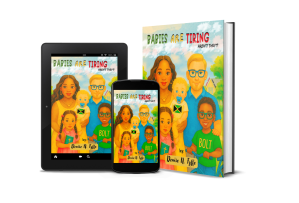
This is one of the reasons Babies Are Tiring, Aren’t They? When Baby Came Home resonates so deeply with families. The rhythm isn’t accidental. It’s intentional. It’s crafted to soothe, to entertain, and to help children process the emotional shifts that come with welcoming a new baby. Rhythm becomes a bridge between the child’s inner world and the story unfolding on the page.
Repetition as Emotional Safety
Repetition is one of the most underestimated tools in children’s literature. Adults sometimes think repetition is simply for memorization, but for children, it’s much more than that. Repetition is reassurance. It’s stability. It’s the literary equivalent of a familiar blanket or a favorite stuffed animal.
When a phrase returns again and again, children relax. They know what’s coming. They feel in control. And during seasons of change — like when a new baby arrives — that sense of predictability becomes even more important. Children crave something steady when everything else feels new.
Your book uses repetition in a way that mirrors real family life. The tired moments repeat. The funny moments repeat. The baby’s needs repeat. And through that repetition, children learn that these moments are normal, expected, and manageable. They begin to understand that the chaos of babyhood isn’t a disruption — it’s a rhythm of its own.
How Rhythm Helps Children Process Big Emotions
Children don’t always have the words to explain what they’re feeling, but they can feel the rhythm of a sentence. They can sense when a story slows down, speeds up, or pauses. These shifts help them regulate their own emotions. A rhythmic story can calm a child who feels overwhelmed, energize a child who feels uncertain, or comfort a child who feels displaced by a new sibling.
This is why rhythmic storytelling is so effective for families preparing for a new baby. It gives children a safe emotional container. They can laugh at the silly moments, breathe through the chaotic ones, and settle into the gentle ones. Rhythm becomes a quiet teacher, showing them how to move through change with confidence.
And because your book features a multicultural Jamaican‑American family, the rhythm carries cultural warmth as well. Caribbean storytelling traditions often blend humor, cadence, and heart — and that influence shines through in your writing. Children feel that warmth even if they can’t name it.
Using Rhythm at Home: How Parents Can Make the Most of It
Parents often underestimate how powerful rhythmic reading can be. When a story has a strong cadence, it becomes more than a book — it becomes a ritual. A bonding moment. A shared experience that children look forward to.
Here are a few simple ways families can use rhythm to support children during the transition to a new baby:
- Read the book at the same time each day. Predictability builds security.
- Let children finish repeated lines. It gives them ownership and confidence.
- Use the rhythm to start conversations. Ask, “What part felt like our house today?”
These small practices help children feel grounded, even when their world is shifting.
Why This Matters for Families With New Babies
When a baby comes home, the entire household enters a new rhythm — one filled with feedings, naps, cries, and unpredictable moments. Older siblings feel that shift deeply. They’re adjusting to new routines, new expectations, and new emotions. A rhythmic story helps them make sense of it all.
Your book doesn’t shy away from the real moments. It doesn’t pretend that everything is easy. Instead, it offers a gentle, musical way to explore the truth: babies are tiring, families are growing, and love is expanding. The rhythm helps children laugh, breathe, and understand that they’re still an important part of the family.
And because the story is rooted in cultural authenticity, it speaks to families who rarely see themselves represented in children’s books. The rhythm becomes a celebration of identity — a reminder that their story is worth telling.
A Story That Stays With Children Long After the Last Page
The beauty of rhythmic storytelling is that it lingers. Children repeat the lines. They hum the cadence. They carry the story with them. And in doing so, they carry the reassurance that the book offers: that change can be navigated, that feelings can be understood, and that love grows even in the busiest seasons.
Babies Are Tiring, Aren’t They? isn’t just a story — it’s a rhythm families can return to again and again. It’s a reminder that even in the chaos of babyhood, there is beauty, humor, and connection. And for children adjusting to a new sibling, that rhythm becomes a quiet anchor.
About the writer:
Minister Denise N. Fyffe is a devoted Christian, author, and servant of God, whose life is guided by her faith and values. Since accepting Jesus Christ at a young age, she has made it her mission to share her journey. She also shares her knowledge of the Bible with others. Besides her passion for writing, Minister Fyffe is actively involved in outreach, Christian mentorship, and ministering the Word of God.

Babies Are Tiring, Aren’t They? isn’t just a story — it’s a rhythm families can return to again and again. It’s a reminder that even in the chaos of babyhood, there is beauty, humor, and connection. And for children adjusting to a new sibling, that rhythm becomes a quiet anchor.
 Jamaica Pen Publishers