The Evolution of the Family Across Cultures
by: Denise N. Fyffe
Family is one of the oldest human institutions, yet it has never been a fixed or uniform concept. Across centuries and continents, the idea of family has shifted in response to survival needs, cultural traditions, spiritual beliefs, and the pressures of changing societies. What we recognize as “family” today is the result of countless historical forces—some gentle, some violent, some chosen, and some imposed.
Understanding this evolution is essential, because it reminds us that the modern family, in all its forms, is not a mistake or a deviation. It is the natural outcome of humanity’s ongoing journey through history, migration, faith, technology, and social transformation.
In many early societies, family life was shaped by the land itself. Communities depended on agriculture, hunting, and shared labor, which made extended kinship networks essential. In Indigenous cultures across the Americas, including the Taino people of the Caribbean, family was not limited to bloodlines. It included clans, communal child‑rearing, and a deep sense of collective responsibility. Children belonged to the community as much as to their parents, and elders were honored as carriers of wisdom. These early patterns established a foundation of interdependence that would echo through generations, even after colonization disrupted traditional ways of life.
The Caribbean offers one of the clearest examples of how history reshapes family structures. Colonization by the English, Spanish, French, and Dutch brought European family norms into the region, but these norms collided with the realities of plantation life, forced migration, and enslavement. African families were torn apart, re‑formed, and rebuilt under unimaginable pressure. In the absence of stable nuclear households, Caribbean people created new forms of kinship—matrifocal families, extended networks, and community‑based caregiving.
Grandmothers, aunts, cousins, and neighbors became central figures in raising children. These structures were not simply cultural preferences; they were acts of survival, resilience, and adaptation. Even today, Caribbean families carry the imprint of this history, blending African heritage, European influence, and Indigenous memory into a unique and enduring family model.
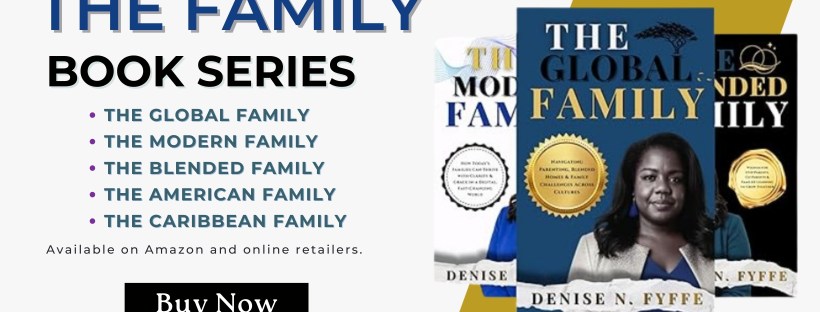
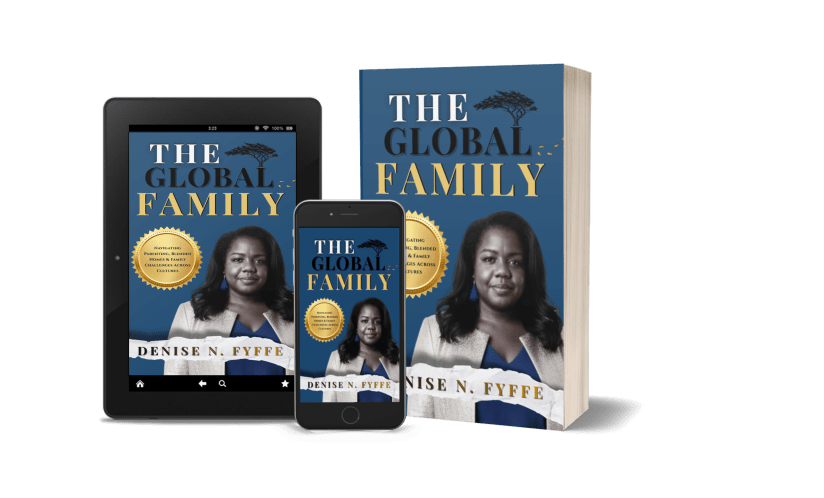
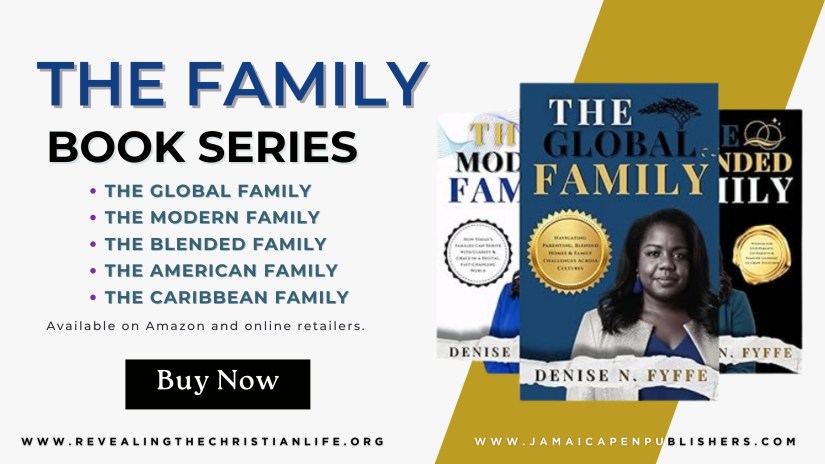
If you are ready to learn more about the family, get copies from The Family Book Series. Whether you are raising children, blending families, healing generational patterns, or simply seeking a deeper understanding of the people you love, this series provides the wisdom and perspective to support you on the journey.
Before you go, please remember to like, share and click the Follow button to subscribe and support our ministry and website. Also, you can visit the Bookstore page to purchase any of the books there. Thanks for your support.
About the writer:
For over 20 years, Denise N. Fyffe experience spanned education, IT, publishing, and ministry leadership. Her career has been defined by a deep commitment to empowering others through education & transformational resources. As Founder of Revealing the Christian Life Ministry, Academy and Foundation, she has built an international ministry that reaches tens of thousands of people annually across over 200+ countries.
She has also authored and published 100+ books (fiction & non-fiction). This also led to her work as a content editor & publisher. Moreover, Denise enjoys traveling, gardening, volunteering or coaching aspiring writers. As one of the board members of the Jamaica Writers Society, she is passionate about sharing her culture & progressing the cause of writers.
 Jamaica Pen Publishers